Ministry of Agriculture, Irrigation and Water Development has unveiled a major overhaul of Farm Inputs Subsidy Programme (Fisp) that includes reverting to paper coupons and halving beneficiaries to 610 931.
The reforms have also seen mandatory incorporation of production and use of Mbeya organic fertiliser in a bid to improve food security.
The ministry has since embarked on a sensitisation of agricultural development divisions (ADDs) on the new operational guidelines for the 2026/27 programme.
Further, the reforms have shifted implementation to farmers’ organisations (FOs) which will identify beneficiaries, distribute coupons and oversee bulk redemption of subsidised inputs under the Decentralised Agricultural Extension Services System (DAESS).

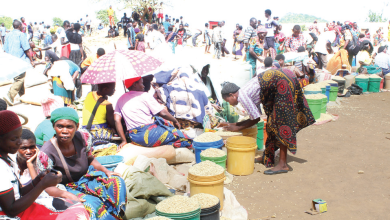
fertiliser home. | Govati Nyirenda, Mana
Under the new arrangement, 610 931 smallholder farmers will directly receive subsidised inorganic fertiliser and certified seed while 1 221 862 are expected to be indirectly reached through compulsory integration of Mbeya organic fertiliser production.
Reads the guidelines in part: “As a condition of programme participation, beneficiaries shall actively engage in the production and utilisation of Mbeya organic fertiliser.
“Extension workers shall provide technical guidance on the preparation, management and application of Mbeya organic fertiliser. Complementary Integrated Soil Fertility Management requirements have been included as part of the programme.”
In the K10.9 trillion 2026/27 National Budget, Parliament approved an allocation of K106 billion for input procurement comprising K102 billion for fertiliser and K4 billion for certified maize seed. The total Fisp allocation is K111 billion.
The allocation is less than half the K241 billion spent in the previous season when the programme targeted 1.1 million beneficiaries.
Fisp is expected to procure 61 094 metric tonnes (MT) of NPK and Urea through the Smallholder Farmers Fertiliser Revolving Fund of Malawi and 3 054MT of certified maize seed through competitive tenders.
Beneficiaries are expected to pay K50 000 to redeem a five-kilogramme (kg) packet of certified maize seed at K10 000 and two 50kg bags of fertiliser, subsidised at K20 000 each.
To combat fraud and political interference, the coupons are set to have unique serial numbers and ministry-approved security features linked to a central database.
The guidelines also require that only farmers appearing on approved beneficiary registers receive inputs, with redeemed coupons reconciled against supplies issued and extension workers conducting random verification visits.
Reacting to the changes, Lilongwe University of Agriculture and Natural Resources (Luanar) Centre for Agricultural Research and Development director Innocent Pangapanga said the changes were welcome because using farmers’ organisations could improve accountability and reduce diversion of subsidised inputs.
“The approach is a strong reform of Fisp that will help enhance accountability and strengthen the warehouse receipt system in the country,” he said.
In a separate interview, agricultural economist Tamani Nkhono Mvula said the reforms could improve climate resilience through greater use of organic fertiliser, but warned that implementing the programme through farmers’ groups could exclude non-members and create divisions.
“It is a good idea because it will reduce the amount of inorganic fertiliser required while increasing the area that can be covered. It will also improve soil fertility and moisture retention as we move into El Niño conditions. Ultimately, farmers will benefit,” he said.
But commercial farmer Felix Jumbe argued that the reforms are a departure from Fisp’s original purpose of helping poor farmers.
He also faulted the use of Mbeya fertiliser, describing it as ineffective.
“If you compare it [Mbeya] with chicken manure, the latter performs much better. The use of Mbeya is another sign that the original purpose of Fisp is gradually being abandoned,” said Jumbe.
Minister of Agriculture, Irrigation and Water Development Roza Mbilizi and Principal Secretary Erica Maganga referred The Nation to ministry spokesperson Salome Gangire who said she needed more time to respond. However, she had not yet responded by press time at 9pm.
The reforms come amid growing scrutiny and calls for an exit strategy for the country’s farm subsidy programmes.
In the past six years, government has cumulatively spent K913 billion on agricultural subsidies while also spending K873 billion on emergency food assistance as millions continued to face food insecurity.
Malawi recorded a maize deficit of about 600 000MT in 2025 after producing 2.9 million MT against a national requirement of 3.6 million MT.
The Malawi Vulnerability Assessment Committee projected that four million people would face hunger during the 2025/26 consumption period, forcing government to import 200 000MT of maize from Zambia.
In February 2025, Pan-African research entity Afrobarometer established through a perception survey that most Malawians believed the subsidy programmes benefitted agro-businesses and public officials more than the intended smallholder farmers.
Introduced in the 2005/06 season, Fisp was once credited with boosting maize production and food security. However, repeated concerns over leakages, inefficiencies and persistent food shortages have intensified calls for far-reaching reforms.